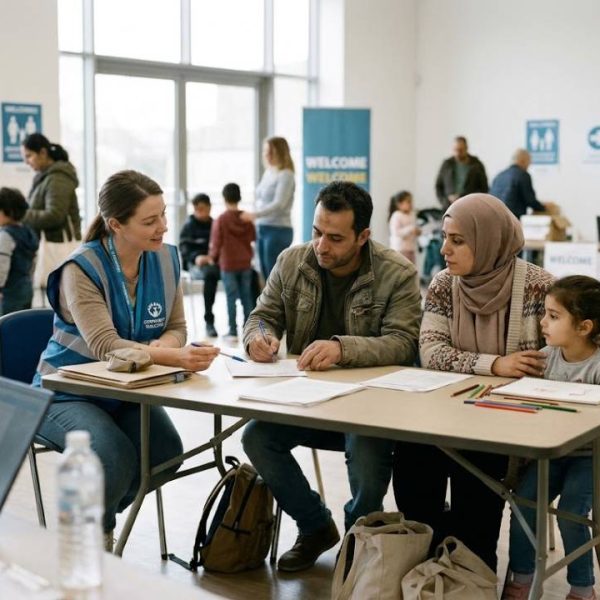
A newcomer in Birmingham arrives at a council office to register for a school place. The form is in English and a leaflet in a second language that was made by a free online tool. One line says the family must bring proof of address but the translation reads proof of a speech. The parents go home and return a week later. The school place has gone.
Language access is a plain idea. A person who arrives in a new country or a new city must be able to read the forms that govern daily life. School places and health registration and tax numbers all depend on a few key words. A newcomer who misreads one of them loses time and sometimes money.
Poland and Romania are two of the countries that many people have left to work and study in other parts of Europe. Most of them are lawful residents and many are citizens of the European Union. Councils and charities and employers deal with them every week and often rely on whoever on the team speaks the language.
Many offices plan the process first and the language last. They write the form in English and then ask a colleague to translate it between two meetings. Small slips in words like resident or application can change what a person thinks they have agreed to. The language plan must be part of the service plan from the first draft.
This article explains how councils and charities and employers can prepare clear forms and notices for Polish and Romanian speaking newcomers. It covers registration forms and official letters and interviews and where to find public guidance. It is written for small teams with small budgets and it treats every reader with respect.
Decide Which Documents Matter Most
List every document a newcomer must read or submit in the first months. Registration forms and tenancy papers and school letters come first. Health leaflets and tax notices and work contracts follow. Some documents must be accepted by an official body so a team can order certified translation services and keep the signed statement with the original in the file.
Create a short glossary before any translation starts. Fix the words for resident and registration and proof of address and appointment and appeal. Add the names of the offices and schemes in your area. Ask the translator to keep each term identical in every document. This step prevents the quiet confusion that grows when three people translate three letters in three weeks. Store the glossary where caseworkers and clerks can both find it and review it when a rule changes. Share it with the interpreters who attend interviews so that the spoken word matches the written one.
Polish and Romanian Need Local Care
Polish translation services for official texts must keep a respectful tone and short instructions. Polish uses a formal address that people expect from an office and a friendly English line can sound careless when copied word for word. Polish also changes word endings by grammar so a form that names a street or a date must use the right form. Strong polish translation services check names and places against the original document so that no letter is lost.
The Romanian language looks close to Italian and Spanish and that tempts teams to skip a review. Many legal and civic words in the Romanian language come from Latin or French but they can carry a slightly different meaning at home. The Romanian language also has special letters that break in some online forms and on older printers. Ask for a proof of every letter at its final size and ask a native speaker to read it aloud. A form in the Romanian language that prints cleanly tells newcomers that the office planned for them. If you need polish translation services for a long guide tell the agency early because large files need more than one translator.
Check the Public Guidance
Use respected sources before you write your own advice. The Migration Observatory publishes research briefings that explain terms and trends in plain language. Our guide on USCIS certified translations shows how one official body sets rules for the documents it accepts and why those rules matter.
For a global view of mobility IOM shares reports and data on migration. Keep the source and the date of every page you rely on so that you can update your materials when the rules change. A short note in the file helps the next person who revises the guide. Print a copy because web pages can move without warning.
Build a Review Routine
Choose one person to speak with the translation team. Share the glossary and examples of past letters. Ask for a translation memory so that repeated phrases stay identical across every document. Send one form and one letter as a test before you commit to the whole service. Ask how the agency protects personal data and who can open your files. Ask for a clear quote with the price per page and the cost of urgent work.
The cost of a careful translation is small next to the cost of a missed school place or a late tax form. A letter that a parent understands at first reading does more than a long report that nobody sees. Funders and inspectors also look kindly on teams that can show every notice in the languages their residents use. Many councils now include translation in each service budget from the start and they save time on every later case.
Fair treatment begins when a newcomer can read the form.